

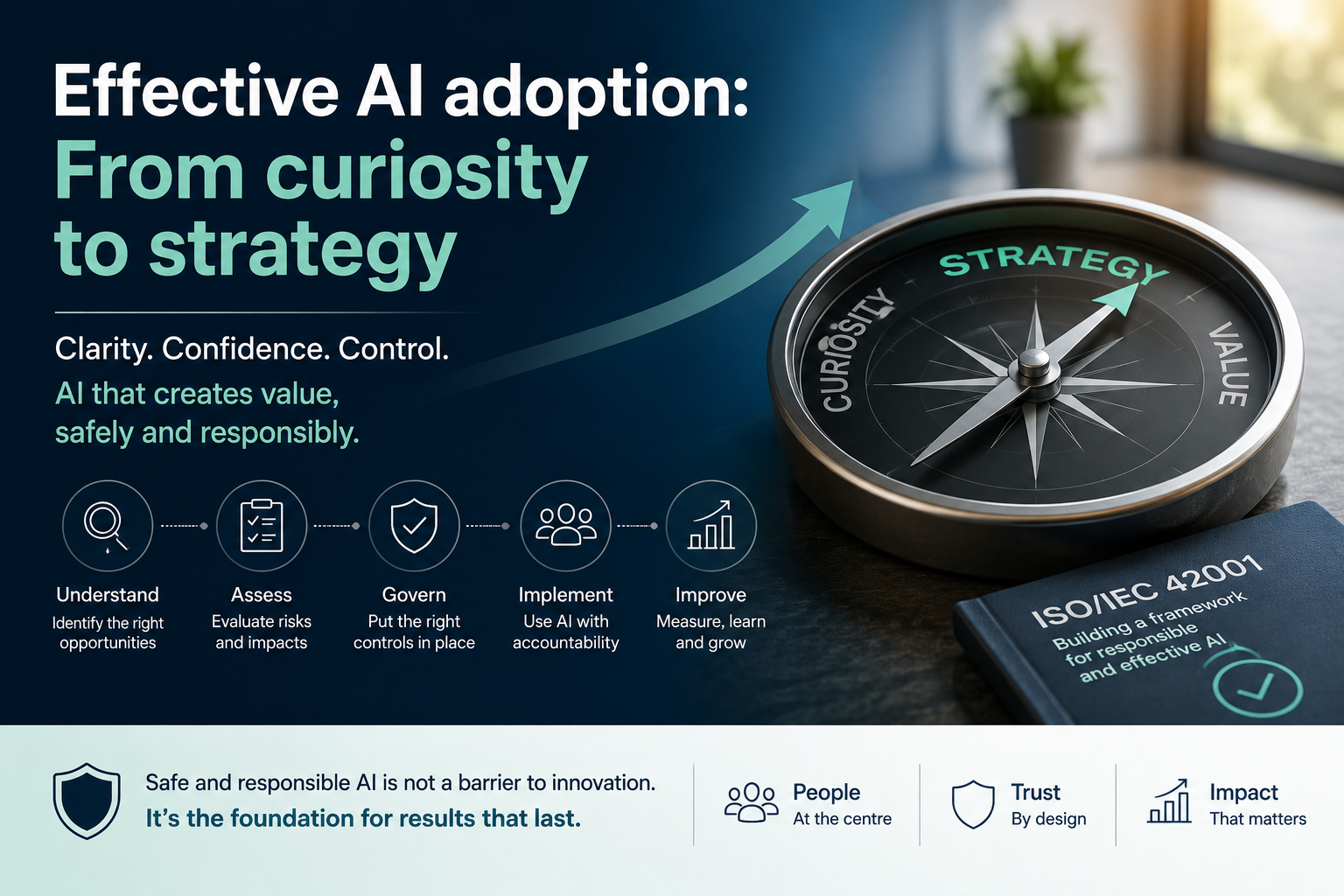
Effective AI Adoption from Curiosity to Strategy
Many organisations view AI governance as a barrier to innovation. In reality, the opposite is often true. This article explores why the thinking behind ISO/IEC 42001 can help organisations move from AI experimentation to purposeful adoption by providing clarity on where AI creates value, how success should be measured, and how risks can be managed. Discover why responsible AI adoption is not separate from effective AI adoption—it is the foundation of it.
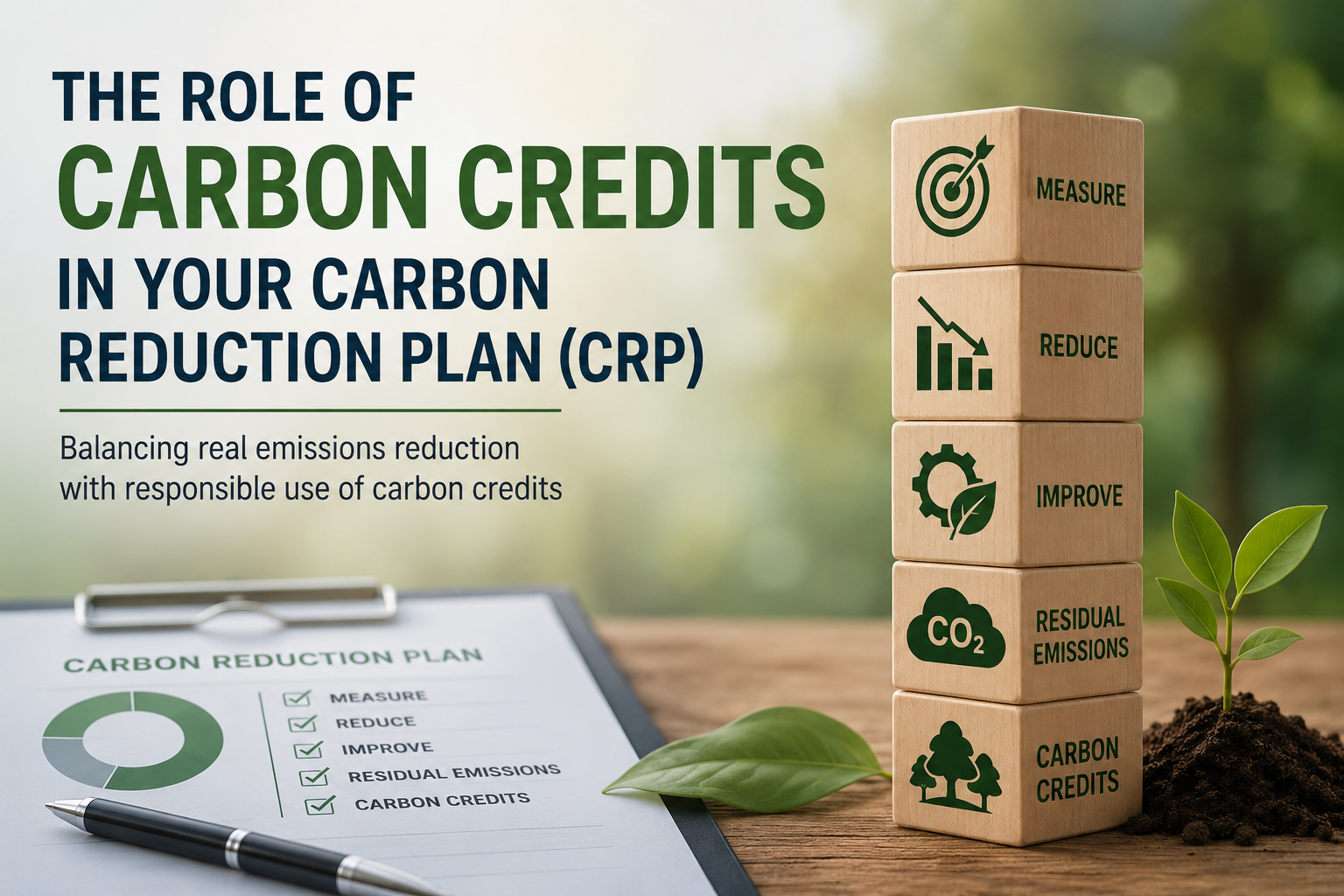
The Role of Carbon Credits in Your CRP
Carbon credits are becoming an increasingly common topic in sustainability discussions, but what role should they play in a Carbon Reduction Plan (CRP)? This article explores how carbon credits fit within Net Zero strategies, public procurement requirements, and supplier environmental commitments, offering practical reflections for organisations seeking to strengthen their sustainability credentials and compete for public sector contracts.
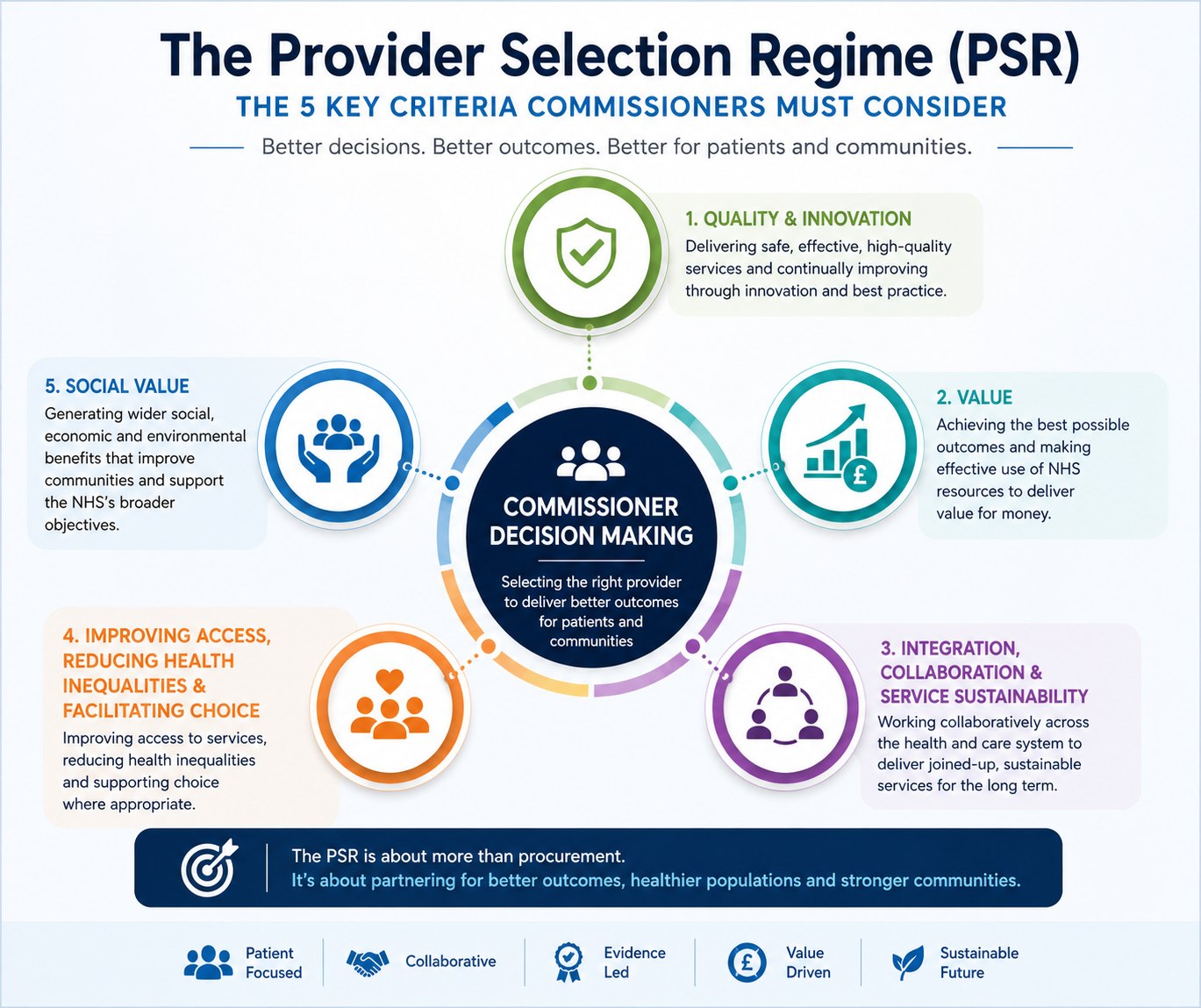
Work Winning in the NHS
Many suppliers understand the Provider Selection Regime (PSR), but fewer understand how NHS commissioners use it to make decisions. This article explores the five key criteria commissioners must consider and offers practical guidance on how suppliers can better position themselves to win NHS contracts by aligning with commissioner priorities, patient outcomes and system-wide objectives.
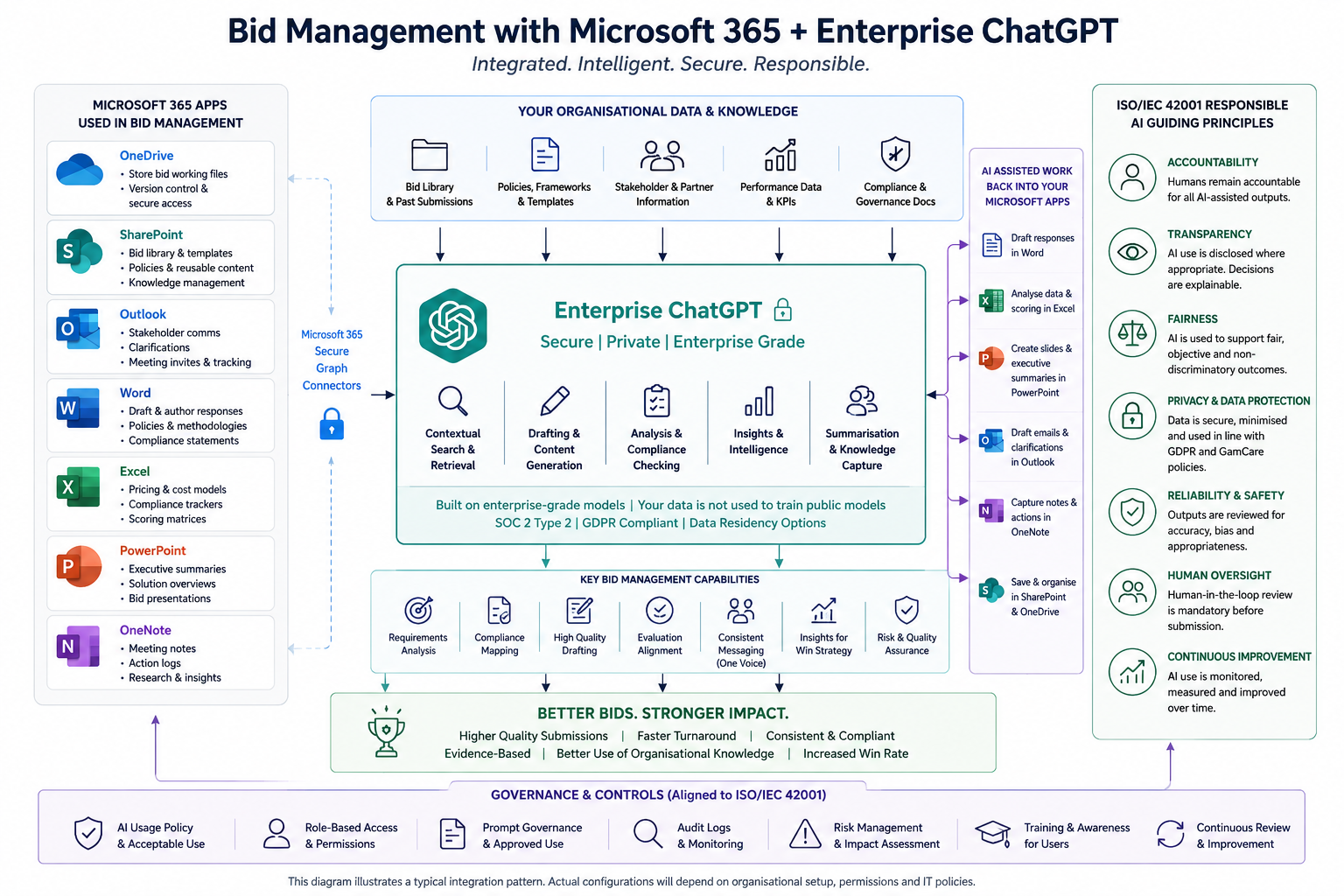
AI in Bid Management: Competitive Advantage or Governance Risk?
AI is rapidly reshaping bid management and statutory commissioning environments. But the real challenge is no longer whether organisations should use AI — it is how they can adopt it responsibly, transparently and effectively while maintaining governance, trust and competitive advantage in public sector procurement.
Bid Writing Isn’t the Problem
Despite having skilled bid writers and a strong value proposition, many organisations still struggle with low win rates. In this article, I explore why the issue is often not bid writing itself, but stakeholder management. Drawing on a recent discussion with a major transport organisation, I explain how stakeholder mapping, internal alignment and operational engagement can significantly influence bid quality, evaluator confidence and ultimately commercial success.
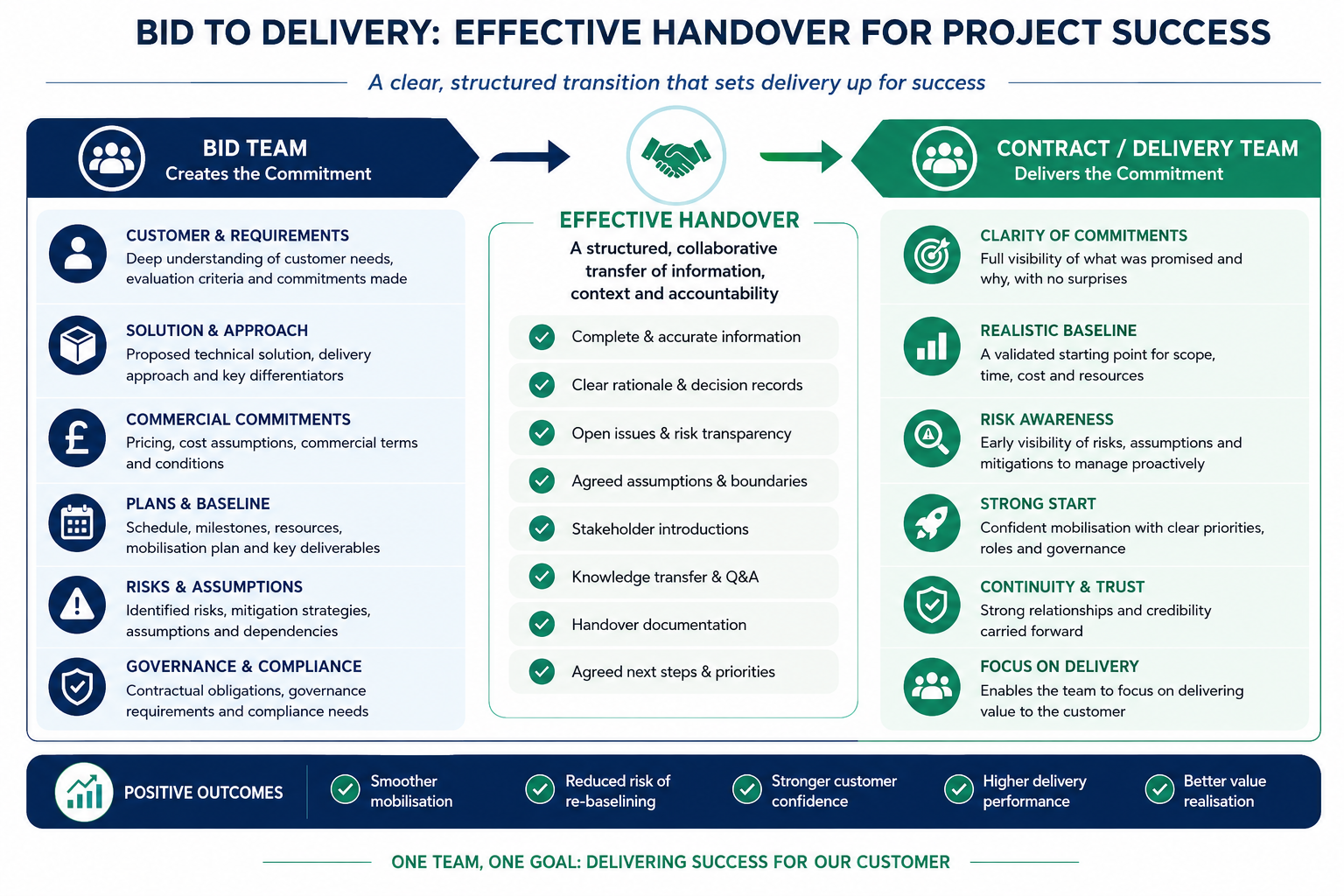
From Bid to Delivery: The Benefits of Effective Project Baselining
Effective project baselining during the bid phase helps organisations bridge the gap between winning work and delivering it successfully.

When Capability Isn’t Enough
In many organisations, bid readiness is treated as a downstream activity, triggered when an opportunity appears; the reality is far more fundamental…

When Sustainability Becomes Policy Infrastructure
Sustainability and supply-chain frameworks are increasingly acting as policy infrastructure rather than technical tools. As public ambition accelerates, the real risk is not delivery failure but legitimacy drift. This article explores why a public affairs lens is now essential to ensure coherence, credibility, and confidence across complex public-sector frameworks.

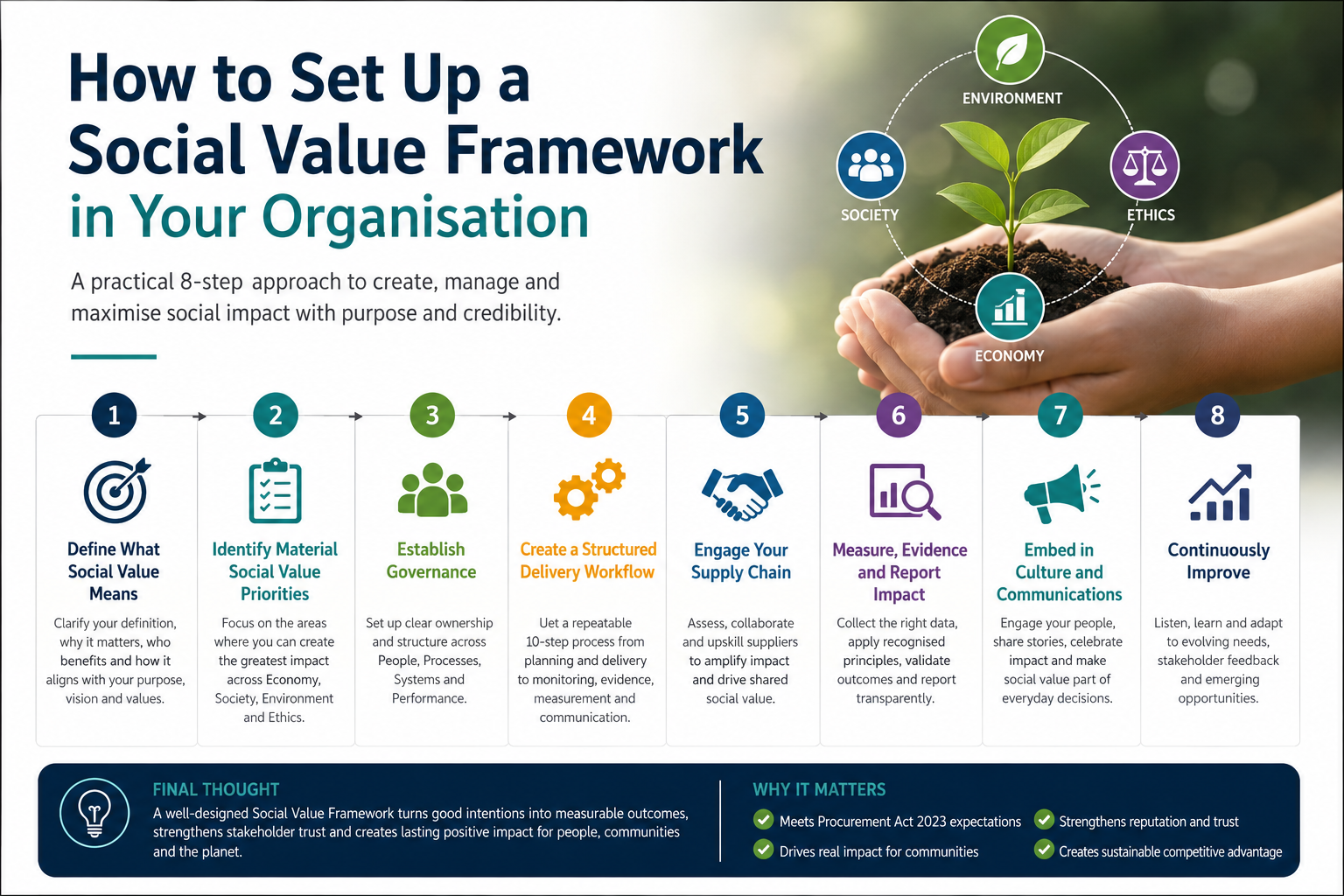
Making Social Value Fit
As social value becomes more firmly embedded in procurement practice, the focus is increasingly shifting from policy design to practical fit — how social value expectations translate into commitments that work on the ground, across diverse markets and delivery models.

One Smart Way to Strengthen Bid Impact
A practical, evaluator-friendly way to present KPIs, social value and compliance in public sector tenders.

Social Value Intentions & Procurement Realities
“The most effective social value outcomes emerge when alignment is treated as a core design principle.”
Understanding how a market is structured — its cost base, labour intensity, geographic footprint, and capacity for innovation — allows social value requirements to be shaped in ways that suppliers can genuinely deliver.
Early Market Engagement to Social Value Outcomes
As the updated Social Value Model comes into effect, one of the most positive developments is the strengthened emphasis on early market engagement.

Commercial Due Diligence Needs Impact Forecasting
Commercial due diligence has always evolved in response to the wider economic environment, and as regulation and investor behaviour continue to converge around impact as a driver of performance, CDD practitioners are increasingly recognising that understanding a company’s impact is not a moral exercise — it is a commercial one.

The Enablers for Stronger Social Value
The UK has taken decisive steps forward in strengthening how social value shapes public procurement, and the updated Model reinforces that social value is a core requirement with clear expectations.

Clinically-Led Innovation: Partners the NHS Needs
Clinically-Led Innovation: The Kind of Partner the NHS Needs More Than Ever

A New Chapter for Social Value
Over the past few years, social value has evolved from a “nice to have” to an essential component of how the UK delivers public good through procurement.

Winning Public Contracts
There has never been a better time for SMEs in Spelthorne to start winning public sector contracts. If you’re a Spelthorne-based SME looking to grow, diversify, or enter the public sector supply chain, now is the moment to take action.

Spelthorne’s Corporate Plan for Suppliers & Businesses
Spelthorne Borough Council’s Corporate Plan 2024–2028 sets out an ambitious vision for social improvement across the borough. How can current and aspiring suppliers best align with — and actively support — this vision?

How to Quantify Your Social Impact with AI
Organisations are under growing pressure to prove the social impact they deliver — not just describe it. Whether you’re bidding for public contracts, engaging investors, or reporting to boards and communities, the question is the same:

How the New SME Action Plan Helps Win More Contracts
The UK Government has reaffirmed its commitment to helping small and medium-sized enterprises (SMEs) succeed in public sector procurement with the publication of the new SME Action Plan on 20 October 2025.